Posts

Showing posts with the label Global Handwashing Partnership

Event - Spotlighting Hand Hygiene, Elevating the Little H on Global Handwashing Day and Beyond.

Image
As we approach Global Handwashing Day, it’s crucial to reflect on the significance of hand hygiene in our daily lives. This year, the Global Handwashing Partnership will be hosting its annual event at the 2024 UNC Water & Health Conference through a spotlight session titled, “ Spotlighting Hand Hygiene: Elevating the Little H on Global Handwashing Day and Beyond . ” Elevating the Little H in WASH While water and sanitation often take center stage, it’s crucial to elevate the “little H” – hygiene – to ensure comprehensive health and well-being. Hygiene, particularly hand hygiene, plays a pivotal role in preventing the spread of infectious diseases and maintaining overall health. Despite its importance, hygiene often receives less attention and resources compared to water and sanitation. This forthcoming session aims to shift that focus and highlight the critical role of hand hygiene within the broader WASH community. Elevating the little H in WASH means recognizing that hygiene i...
Strengthen national hand hygiene efforts and measuring hand hygiene progress.

Image
This Global Handwashing Day , governments should lead the way for clean hands , strengthening national hand hygiene efforts and measuring hand hygiene progress , to ensure  Clean Hands are Within Reach .

Encourage people to wash their hands.

Image
Global Handwashing Day was founded by the Global Handwashing Partnership , and is an opportunity to design, test, and replicate creative ways to encourage people to wash their hands with soap at critical times.   For media and interview requests, contact us on: unwater@un.org mentioning [Media request] in the subject heading.

What are you doing to ensure Clean Hands are Within Reach?

Image
Join us on Wednesday, October 11th, to hear what others are doing to ensure hand hygiene progress at the global, national, and individual levels. 2023 Global handwashing day annual event. WHEN: October 11th, 2023. TIME: 8:00 AM EDT - 12:00 1:30 pm UTC. EVENT TYPE: hybrid event. Register to participate!   Follow the conversation with the hashtags: #CleanHandsareWithinReach .

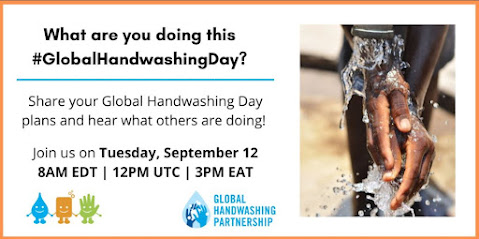
What are you doing this global handwashing day?

Image
Join us next Tuesday, September 12, for our annual Global Handwashing Day briefing call ! 

Improve Hand hygiene in domestic settings.

Image
  Hand hygiene in domestic settings is associated with a range of socio-demographic factors and behavioral determinants. Studies included in our analysis reported household knowledge, access to water, cultural beliefs and practices, and perceived susceptibility to illnesses as significant predictors of hand hygiene practice ( Agaro et al., 2022 ; Ogutu et al., 2022 ). For example, Leung et al. (2022) found that while parents had good knowledge of hygiene as a preventative measure, their attitudes and practices did not always translate into hand hygiene actions . This finding emphasizes the need to design programs that go beyond hygiene education and address key determinants to change hygiene behavior . One qualitative study by Sedekia et al. (2022) assessed a WASH intervention on soil-transmitted helminth (STH) infection among children. The authors selected 20 households to engage in sessions that promoted various WASH improvement activities. These sessions were targeted to...

Examine handwashing knowledge and practices among school children and their caregivers.

Image
  Educational institutions provide an important context to promote hand hygiene behavior for the next generation . Limitations for hand hygiene support in schools include lack of access to basic handwashing facilities , especially in low and middle-income countries. Multiple studies published in 2022 examined handwashing knowledge and practices among school children and their caregivers. A cross-sectional study by Berhanu et al. (2022) investigated handwashing practices 5 among public primary school children in Ethiopia, finding that only 23.4% of the children reported always washing their hands before eating and only 16.7% reported always washing their hands after using the toilet. Availability of handwashing facilities, grade level, residence, and presence of role models were significantly associated with reported handwashing practices. The findings revealed that students with access to a handwashing facility in their home were 3.62 times more likely to wash their hands compa...

Focus on specific initiatives to improve hand hygiene in healthcare settings.

Image
 Multiple studies published in 2022 focused on hand hygiene compliance in healthcare settings ( Al-Anaziet al., 2022 ; Kamara et al., 2022 ). A cross-sectional study by Umar et al. (2022) reported hand hygiene compliance as 34.7% among nurses working in public hospitals in Ethiopia, with positive association between hand hygiene compliance and gender (male), work experience (greater than 5 years), training in hand hygiene, availability of running water, and knowledge of hand hygiene. Another study by Yehouenou et al. (2022) investigated hand hygiene behavior in a public hospital in Benin; several factors, including knowledge, attitudes, and social factors, influenced hand hygiene behavior in this setting. In a qualitative study among healthcare workers in Iran, Ahmadipour et al. (2022) identified three broad categories of barriers to hand hygiene practice in healthcare settings that operate at multiple levels. First, the authors identified barriers related to the individual, w...

Focus on the impact hygiene and broader WASH interventions can produce in humanitarian contexts.

Image
  Studies published in 2022 investigated the impact hygiene and broader WASH interventions can produce in humanitarian contexts. White et al. (2022a) conducted a qualitative case study in Northern Iraq to investigate how hygiene behavior is affected by conflict and displacement . The authors found that the ongoing conflict and displacement had a negative impact on hygiene practices, such as handwashing and sanitation. Bisimwa etal. (2022) conducted formative research to develop evidence-based targeted WASH interventions to reduce cholera in hotspots in the Democratic Republic of the Congo. The Preventative Intervention for Cholera for 7 Days (PICHA7) program was developed based on this research, which includes interventions such as promoting hand hygiene, water treatment, and safe food handling practices and emphasizes the importance of community engagement and participation in the development and implementation of such interventions in this context. Some studies examined more n...

Prevent the spread of diseases in public spaces.

Image
 Proper hand hygiene plays a major role in preventing the spread of diseases in public spaces . One study by Akter et al. (2022) investigated implementation barriers and facilitators to a COVID-19 intervention in Bangladesh, focusing on the benefits of engaging the community for program delivery. The authors used a mixed-methods approach and found that engaging influential community members, free-of-cost materials, and telemedicine services were key facilitators in the successful implementation of the program, while irregular participation in trainings, lack of communication and coordination among stakeholders, and inadequate resources were identified as significant barriers. Another study by George et al. (2022) evaluated COVID-19 preventive hygiene behaviors by observing mask wearing , handwashing , and physical distancing behaviors in public indoor spaces in the Democratic Republic of the Congo. The study used a cross-sectional design and found that most participants were o...

Hand Hygiene Impacts.

Image
 Studies published in 2022 cover various topics on hand hygiene impact. Most studies focus on assessing the effectiveness of different interventions in preventing and controlling diseases such as diarrheal disease, healthcare-associated infections, and parasitic infections. Several studies evaluated the effectiveness of hand hygiene practices in preventing or controlling diseases among children . A systematic review and meta-analysis by Wolf et al. (2022) reviewed and synthesized evidence on the effectiveness of interventions to improve drinking water, sanitation, and handwashing with soap on the risk of diarrheal disease in children in low- and middle-income settings. The study found that interventions that promoted hand hygiene were effective in reducing the risk of diarrheal disease among children under 5 years old by 30%. Findings from this study are consistent with previous studies that concluded handwashing with soap can reduce the risk of endemic diarrhea up to 30 to 48%....

Determinants of hand hygiene behavior.

Image
Sustaining hand hygiene behavior change requires addressing a range of behavioral determinants. Behavioral determinants are factors that influence behavior. Determinants for hand hygiene behavior include social norms, affiliation, enabling technologies/infrastructure, nurture, disgust, perceived susceptibility and perceived severity of diseases. The Handwashing Handbook groups these determinants into reflexive, habitual factors (such as culture, environmental cues, and nudges) and more reflective, conscious decision-making factors (such as knowledge and emotional motivators). Enabling technologies are a critical determinant for hand hygiene behavior. Undoubtedly, it is not possible to maintain good hand hygiene without the necessary facilities. However, in a study surveying 29 countries in Sub-Saharan Africa, Endalew et al. (2022) determined that 66.16% of handwashing facilities lacked either water or soap. Access to facilities and supplies cannot be neglected, but it is not the o...

Developing sustainable interventions.

Image
Behavior change takes time. Not only do people need to be motivated initially to take up a healthy behavior, but this motivation must be sustained for the maintenance of this behavior. Whether due to fatigue or the rise of other immediate needs, without reinforcement, healthy habits drop down on the priority list. Several studies in the 2022 Hand hygiene summary report highlight the need for sustainable interventions for lasting behavior change. In a domestic setting , Sedekia et al. (2022) conducted a study and held 20 household sessions on soil-transmitted helminth (STH) among children after which 18 households installed handwashing stations. However, after 8 months, only 8 households had maintained the handwashing stations. These findings show that, although the sessions were initially effective, sustained interventions were necessary to motivate households to maintain and utilize the handwashing stations . Similar effects were seen in a study by Nalule et al. (2022) assessing ...

Address context-specific motivators and barriers to ensure lasting behavior change.

Image
 FHI360 research ers highlight the latest evidence on hand hygiene behavior change using evidence from the latest Hand Hygiene Research Summary published by the Global Handwashing Partnership. Good behavior change programming goes beyond knowledge and education, rather good program design understands the barriers and enablers of hand hygiene behavior. Several studies in the 2022 report highlight the need for sustainable interventions for lasting behavior change. Overall, the 2022 Hand Hygiene Research Summary emphasizes what many of us already know: Increased knowledge of hand hygiene practices does not automatically lead to improved hand hygiene behaviors. While improvements have been made to go beyond health education programs, the latest evidence emphasizes that more should be done to promote hand hygiene behavior change in different contexts. The research for the use of emotional motivators as a determinant for sustained behavior change is promising. Health-related motivat...

Close gaps in access and practice to achieve hand hygiene for all.

Image
GLOBAL HANDWASHING DAY IS AN OPPORTUNITY TO DESIGN, TEST, AND REPLICATE CREATIVE WAYS TO ENCOURAGE PEOPLE TO WASH THEIR HANDS WITH SOAP AT CRITICAL TIMES. Recent years have seen a rise in hand hygiene commitment and action . While great strides have been made, we must triple our current efforts to achieve global hand hygiene targets . Through strong leadership and collective efforts, we can close gaps in access and practice to achieve hand hygiene for all .  Everyone has a role to play to ensure clean hands are within reach.

Focus on the importance of cross-sectoral collaboration.

Image
The Clean, Fed & Nurtured Community of Practice hosted a Webinar with Dr. Marie T. Ruel on the importance of cross-sectoral collaboration. Dr. Ruel is the Director of the International Food Policy Research Institute's (IFPRI) Poverty, Health and Nutrition Division , and the lead author of the 2013 Lancet Series paper: Nutrition-sensitive interventions and programmes: how can they help to accelerate progress in improving maternal and child nutrition ?  Clean, Fed & Nurtured is a global community of practice that brings together the sectors of Water, Sanitation and Hygiene Programme (WASH) , nutrition, and ECD to promote child growth and development.

Highlight the role of hand hygiene in healthcare globally.

Image
  The Global Public-Private Partnership for Handwashing is taking this opportunity to host a webinar discussing the importance of hand hygiene in healthcare , the challenges of achieving good hand hygiene , and lessons for improving hand hygiene in healthcare. Hear from experts from the World Health Organization , the London School of Hygiene and Tropical Medicine , and Johns Hopkins University on:  - Why hand hygiene is so important in healthcare ? - The state of hand hygiene in healthcare facilities around the world. - Hand hygiene lessons from Ebola.  - How to achieve hand hygiene behavior change: lessons from outside healthcare?